The First Test Drive of Our New Life
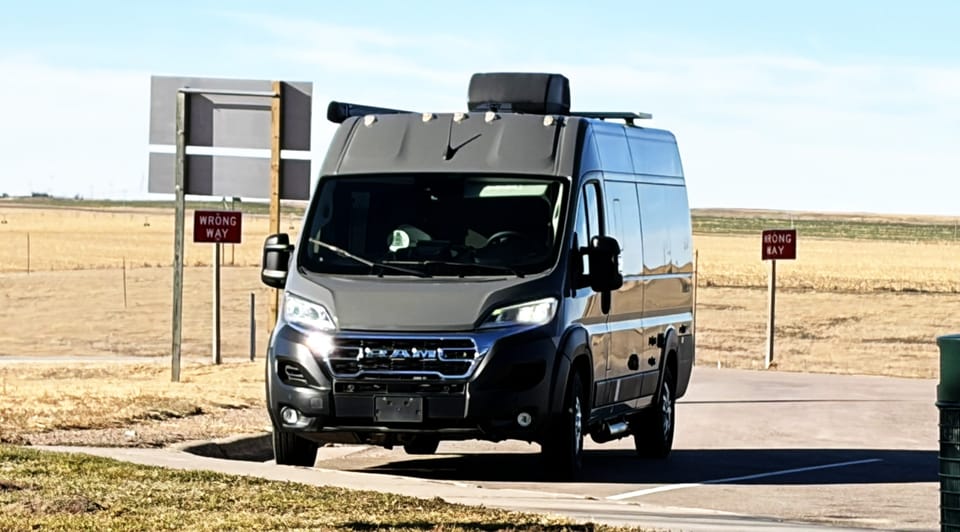
For years, we talked about owning a camper van and traveling slowly around the U.S.
It was never a question of want.
It was always a question of when — and whether it would actually fit the life we were living.
That distinction matters more than most people realize.
Because wanting something and being able to support it — financially, logistically, practically and emotionally — are two very different things.
If you’d rather watch the story unfold, you can see our first van trip here:
The part most people get backwards
From the outside, buying a van can look like a spontaneous, adventurous decision.
From the inside, for us, it’s the opposite.
A van only works when the rest of our life is already simplified.
When we lived in our traditional house and worked full-time jobs, a van would have been:
- Only used occasionally
- Planned around PTO
- One more thing to store and maintain, and then feel guilty about not using
It would have been a nice idea — not a natural extension of our life.
What the tiny house actually changed
Downsizing didn’t just reduce square footage.
It reduced fixed obligations.
Lower monthly costs meant:
- Less pressure to maximize income
- More flexibility in how and when we work
- Fewer systems that depend on us being in one place
In other words, the tiny house didn’t create freedom by itself.
It created margin.
And margin is what allows big decisions to feel supportive instead of stressful.
Why timing matters more than courage
A year ago, buying a camper van would have felt like too much.
At that point, we were still living in our traditional house, working full-time jobs, and planning for a layoff.
Before the layoff was announced, we purchased a small teardrop camper.
It was a lower-cost, lower-commitment way to test whether travel could realistically fit into our life as it existed then. It stored easily, didn’t require major infrastructure changes.
That decision was us settling for what felt doable at that time. A few months later, we decided to sell our traditional house.
Only later — after we sold our traditional house, downsized into a tiny house, and reduced our fixed obligations — did a van start to make sense.
Same desire.
Different capacity.
The part no one talks about: usability
One of the biggest surprises wasn’t excitement — it was familiarity.
Living in a tiny house trained us to think differently:
- About space
- About function
- About what “enough” actually looks like
By the time the van entered our life, we already honed our thinking.
That’s, I think, why it didn’t feel overwhelming.
It felt usable.
And usability matters far more than novelty if you want something to become part of your life instead of a phase. Our fellow camping neighbor said to us "you've used your van exactly 100% more than you used your teardrop!" and she's right. The friction to use the teardrop was high - and the van feels WAY easier.
What this decision really represents
This van isn’t about travel content or checking places off a list (ok maybe there are some places on the list).
It’s about alignment.
It represents a life where:
- Work can move with us
- Home isn’t tied to one address
- Big decisions are supported by structure, not adrenaline
That wouldn’t have been true in our old life — no matter how badly we wanted it.
The takeaway
We didn’t suddenly become more adventurous.
We became more intentional.
And once the foundation was in place, the next step became obvious.
That’s the part I wish more people talked about — not the dream itself, but the quiet, unglamorous work of building a life that can actually hold it.
If you’re in a season where you’re rethinking how you live, work, or travel, this is your reminder that big dreams don’t need rushed decisions — they need the right foundation.
We’ll keep sharing what we’re learning as we figure this out, one intentional step at a time.
Thanks for sharing the journey with us,
-Kathy & Bryan
We shared a more personal, behind-the-scenes reflection on this decision in our Insider newsletter this week. You can subscribe here if that kind of perspective is helpful to you.


Member discussion